
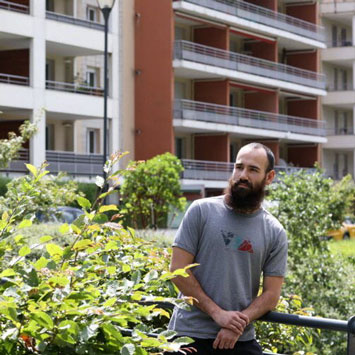
This thesis, entitled "Residential trajectories and modes of inhabiting: an analysis of the role of green amenities in residential preferences and leisure activities in urban areas" was directed by Samuel Carpentier-Postel and Samy Youssoufi.
The defense will take place in the UFR SLHS (Grand Salon), 32 rue Mégevand in Besançon, at 1:30 pm.
Jury composition
Lise BOURDEAU-LEPAGE, University Lyon 3, reviewer
Samuel CARPENTIER-POSTEL, University Marie and Louis Pasteur, Besançon, thesis supervisor
Geoffrey CARUSO, University of Luxembourg, examiner
Ghozlane FLEURY, University of Nantes, reviewer
Thierry RAMADIER, CNRS, Strasbourg, examiner
Samy YOUSSOUFI, University Marie and Louis Pasteur, Besançon, thesis co-supervisor
Abstract
The suburban detached housing model today appears to be reaching its limits. Its sustainability is increasingly questioned, both because of its contribution to land artificialisation and the car dependency it generates. Land-use sobriety policies, embodied by the objective of “zéro artificialisation nette” (ZAN), restrict the future prospects of access to such housing forms, which nonetheless remain strongly favoured by a large proportion of households. Alternatives such as intermediate housing do exist; however, rethinking the residential offer beyond the suburban imaginary requires engaging individuals’ residential aspirations and preferences, in order to design spaces that truly meet expressed needs. Access to green amenities constitutes one of the key factors underpinning the attractiveness of suburban areas. Within this framework, this thesis focuses on residential preferences and the roles attributed to urban green amenities, through an examination of the psychological, sociological, and geographical factors that shape them. The relationship to green amenities is approached through the lens of leisure and residential mobility.
A mixed-methods approach, combining quantitative and qualitative perspectives, was employed. A questionnaire survey conducted in the urban areas of Dijon and Besançon included a photo-questionnaire to assess residential preferences; a mapping tool to collect data on leisure activities in green spaces; and a set of questions addressing sociodemographic profiles, housing conditions, and residential trajectories. Four types of resident profiles were constructed and then integrated as explanatory variables in behavioural models relating to both residential preferences and leisure mobilities. Semi structured interviews were carried out with a subsample of respondents to further analyse the links between residential trajectories and preferences, exploring social representations of the “ideal home” and their relationship with settlement identity.
The results show that detached housing remains strongly preferred. However, some resident profiles express more favourable attitudes towards collective housing forms that are in line with densification goals. The modelling of leisure mobilities reveals a significant effect of resident profiles on the use of green spaces, while accessibility levels to these amenities do not play a significant role. The interviews highlight discrepancies between settlement identities and residential experiences, particularly because other life domains influence the interpretation of residential trajectories, thereby underscoring their subjective dimension. Overall, the findings suggest that moving away from the suburban detached housing model remains difficult for many individuals. Nevertheless, for some identified resident profiles, it would be relevant to encourage reflection on diversifying housing forms both in cities and in nearby suburban areas, with an approach more closely centred on individual needs. In this perspective, green amenities, as public spaces, play an essential role in making the city desirable.